
What Alhambra Records Are Public
Alhambra is inside Los Angeles County, so the public-records system is split across city, county, court, and state offices. The City Clerk keeps municipal and departmental records that originate with the city, except police records. Los Angeles County keeps the major name-linked record sets for deeds, county clerk filings, vital records, elections, and assessment data. Los Angeles Superior Court handles civil, family, probate, small claims, traffic, and criminal case records. California agencies add statewide business, UCC, professional-license, privacy, inmate, and registry tools.
| Record Set | Custodian | Online Index | Access |
|---|---|---|---|
| Real estate deeds and liens | Los Angeles County RR/CC Recorder Division | Official free viewing in person; copy request routes online and by mail | Records since 1851; paid plain or certified copies |
| Fictitious business names | RR/CC County Clerk Division | Open data from February 2024; name search from April 2011 | Online, in person, or mail with filing and search fees |
| Court cases | Los Angeles Superior Court | Civil, family, probate, small claims, and criminal name searches | Paid remote indexes; broader review at courthouse terminals |
| Property and GIS records | Los Angeles County Assessor | Assessor property search and Assessor Portal map | Free online parcel and map paths; exact public field list not fully verified |
| Birth, death, marriage, divorce | LA County RR/CC, CDPH, and Superior Court | Official copy routes; public web index not confirmed for all records | Authorized and informational copy rules; confidential marriage is restricted |
| Jail, prison, and registry records | LASD, CDCR, and California DOJ | LASD inmate locator, CIRIS, and Megan's Law website | Current public data only, with legal-use limits |
Open does not mean unlimited. Juvenile files, sealed cases, adoption records, confidential marriage records, confidential voter records, protected addresses, signatures, Social Security numbers, and driver data can be withheld or redacted. Court remote access is also narrower than courthouse access for sensitive case types.
Alhambra Records Custodians
For Alhambra records, the key practical move is choosing the office that actually holds the file. The city can receive municipal Public Information Request Forms at City Hall, but it tells requesters that birth, marriage, death, and property title records go to the Los Angeles County Registrar-Recorder/County Clerk. Court files go through Los Angeles Superior Court, and current parcel work goes through the Assessor.
Los Angeles County RR/CC
12400 Imperial Highway, Norwalk, CA 90650
800-201-8999
Los Angeles Superior Court
Countywide case access and courthouse terminals
Case access varies by case type
Los Angeles County Assessor
County parcel and assessment records
213-974-3211
The RR/CC recorder landing page is the county doorway for many record types named in Alhambra research.
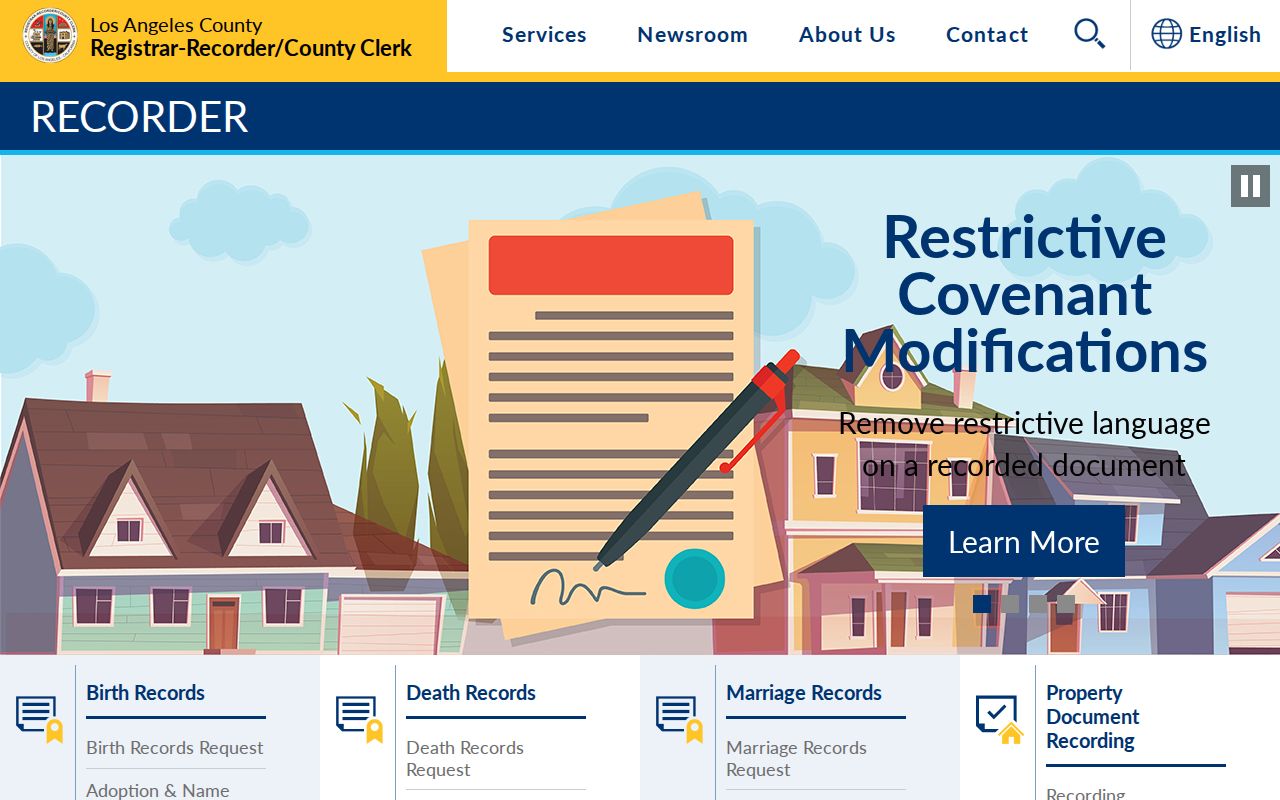
Use that portal to separate recorder records from county clerk records before ordering a copy or planning an in-person visit.
Alhambra Recorder Index Since 1851
The recorder is the deepest official paper trail for Alhambra property and title links. Los Angeles County RR/CC states that it records and maintains county real estate records since 1851. The key research fact is access method: records dated 1851 through 1957 are reviewed in the lower level at Norwalk Headquarters, while records from 1958 forward are reviewed on the second floor. The indexes are alphabetical by name and year recorded, and RR/CC does not accept telephone requests for index searches.
That makes the in-person index a real access channel, not a side note. A grantor is the person or entity giving an interest in property. A grantee receives it. Names in the index can point to owners, former owners, trustees, lien parties, and legal-description clues tied to an Alhambra parcel.
Index clue. A record index identifies where a document can be found. It is not the full image, and it is not the same as a certified copy.
Alhambra Copy Fee Records
RR/CC records may be viewed for free, but copies and certification cost money. The county fee schedule captured in the research lists mail copy prices for real estate records: a plain copy is $5 for the first page and $3 for each additional page. A certified copy is $6 for the first page and $3 for each additional page. A search fee is $0.50 per name per year, with a $1 minimum. Expedited mail through UPS was listed at $18.50, and credit-card handling at $1.75.
Certified copies matter when an official copy must prove what was recorded. Plain copies are often enough for personal research, family history, title curiosity, and matching names to parcels. Ask for the document number, book and page if available, recording date, and party names. That detail keeps the request narrow and helps avoid paying for broad year-by-year searches.
The county posts the real estate copy and search fee schedule as a separate records page.
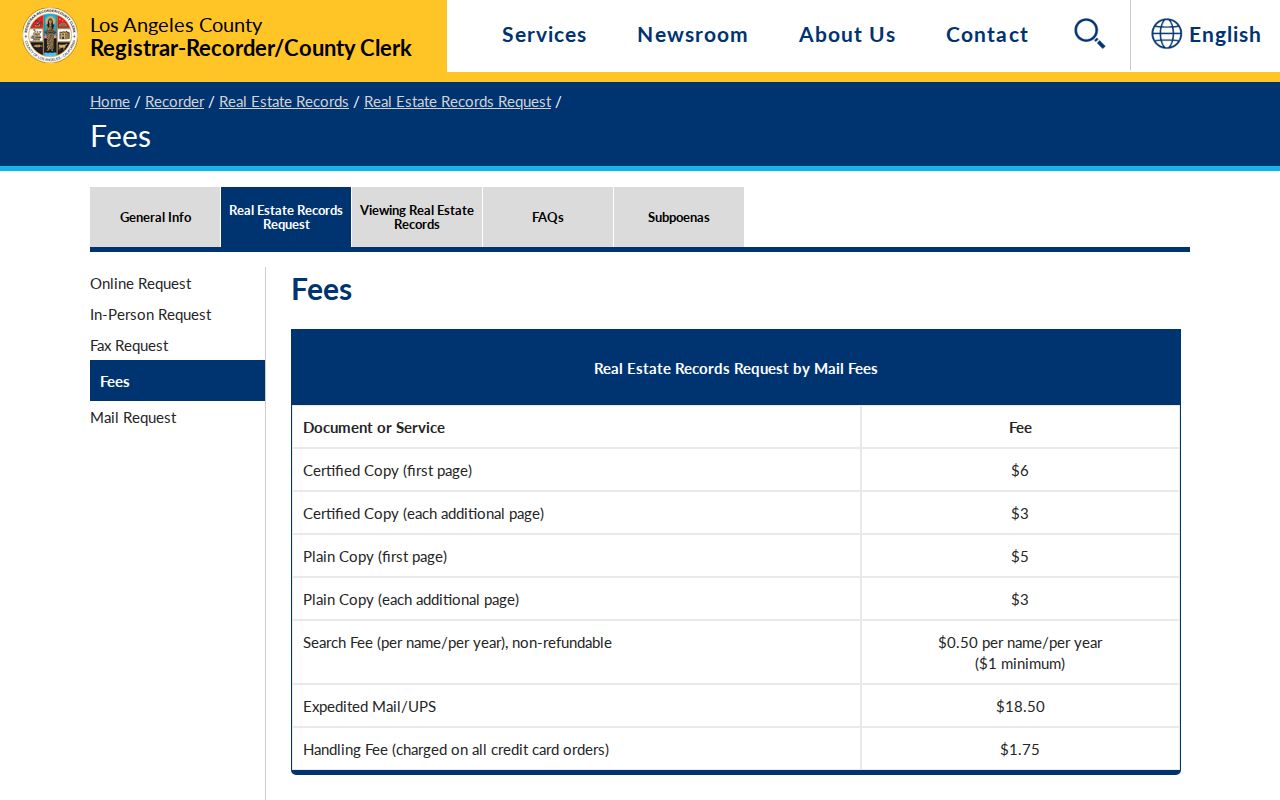
The fee page is useful before a mail request because copy cost, search cost, and certification cost are separate items.
Alhambra Court Records Access
Alhambra court records are Los Angeles Superior Court records. There is no separate city court for general local case files. The civil name search covers General Civil, Limited Civil, Family Law, Probate, and Small Claims matters. Court research reports coverage from 1983 forward for Unlimited Civil, Probate, and Family Law; 1991 forward for Limited Civil; and 1992 forward for Small Claims. Older files may require the Archives and Records Center.
Criminal defendant search is separate. The criminal portal supports Exact Match, Starts With, and Sounds Like search types, with optional filing date limits. Coverage is reported as felony records from 1980 forward and misdemeanor records from 1988 forward, with some earlier misdemeanor index data from former Municipal Court automation. The criminal access page warns that online information is not the official court record, so a courthouse or clerk copy may still be needed.
The court's Find a Case hub separates civil, criminal, traffic, and other case-access routes.
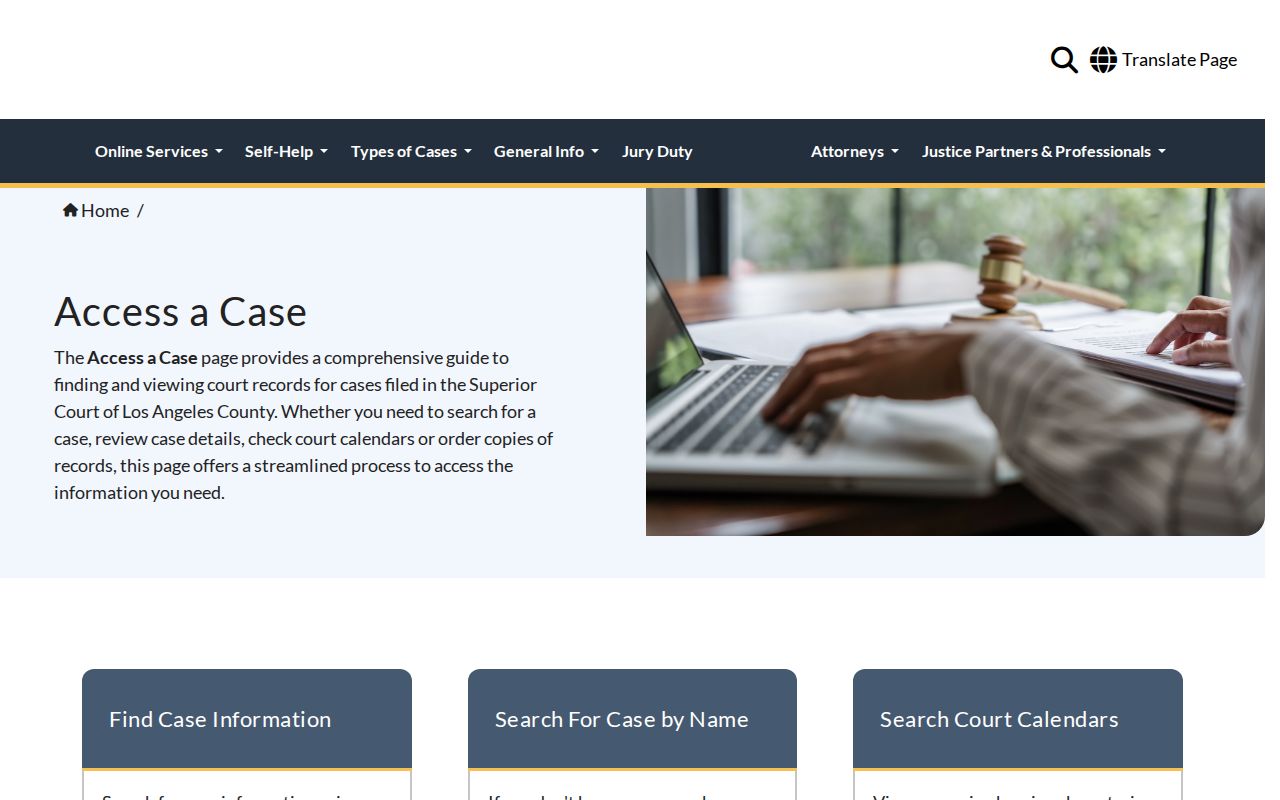
Start there when the case type is unclear, then move to the specific paid index or courthouse channel named by the court.
| Field Label | Type | Required | Options or Format |
|---|---|---|---|
| Last Name | Text | Yes for person search | Party last name |
| First Name | Text | Yes for person search | Party first name |
| Company Name | Text | Alternative | Use for an organization or business party |
| Case type | Index scope | No | Civil, limited civil, family, probate, and small claims |
| Login or payment | Account or guest payment | Yes to complete paid search | Valid credit or debit card; fee is nonrefundable |
The Los Angeles Superior Court online-services FAQ explains search fees, result fields, and terminal access.
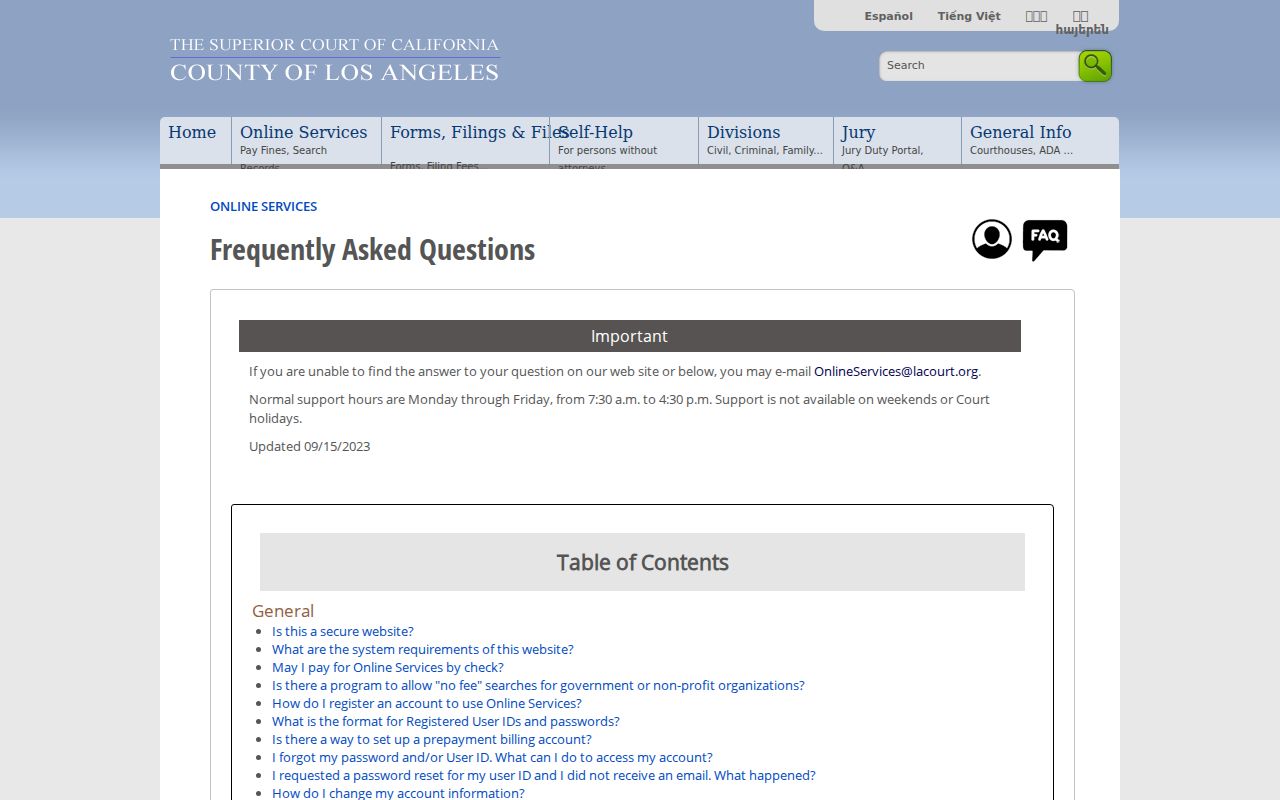
Remote search is strongest for index data. Courthouse public-access computers can show records that are not available for full remote review.
Alhambra Vital Records Split
Birth, death, and marriage records for Alhambra events are county and state records. The practical local custodian is the Los Angeles County RR/CC because Alhambra is in Los Angeles County. California Department of Public Health Vital Records also maintains statewide birth, death, fetal death, marriage, and divorce records and issues certified copies under state rules.
Copy access depends on record type and eligibility. California vital-record access distinguishes authorized certified copies from informational copies. Confidential marriage records are handled only by the county clerk in the county where the confidential license was issued, and certified copies are available only to the two spouses or by court order. Divorce is split as well: CDPH has state vital-record material, while the divorce judgment and case file are Superior Court family-law records.
- Authorized certified copy
- An official copy issued to a person who meets the legal eligibility rules.
- Informational copy
- A copy that can document the record but may not establish identity for official purposes.
- Custodian
- The office that legally holds the record and decides how copies are released.
- Exemption
- A legal reason an office may withhold or redact part of a record.
Alhambra Property Records and GIS
Property work uses three layers. The Assessor identifies parcels, assessment facts, situs address, and map context. The recorder proves recorded instruments such as deeds, liens, releases, and transfers. City Community Development can hold local permit, code, planning, and complaint records, but it is not the title office.
The research could not verify the full official Assessor field list from accessible page text because the portal is JavaScript driven. Describe the search path conservatively as parcel, address, AIN, and map search unless a later official source confirms more. The key distinction is situs versus mailing address. Situs means the property location. Mailing address is where tax or owner mail goes, and it may differ from the Alhambra parcel.
For recorded-document risk checks, Los Angeles County offers the Homeowner Notification Program.
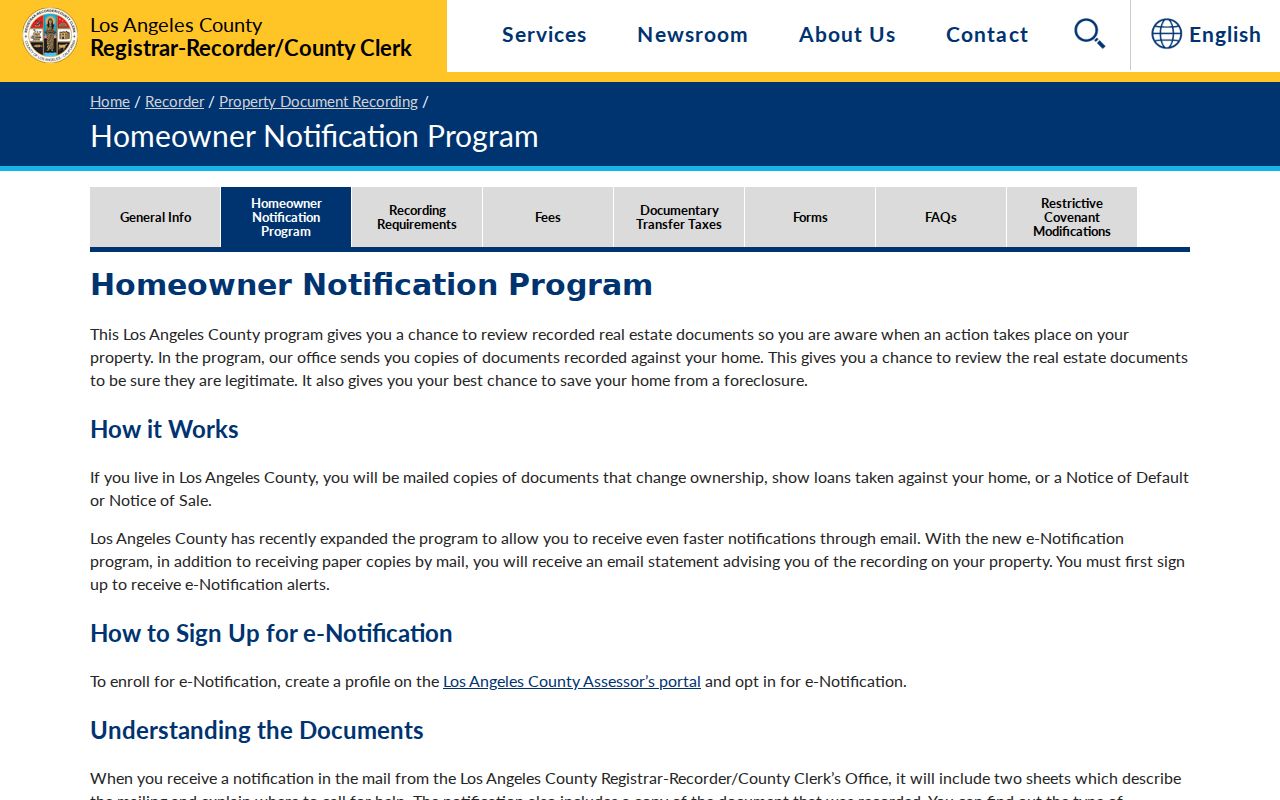
The notice program does not replace a title search, but it gives owners an official alert path when a document is recorded against a home.
Alhambra Restricted Records
Restricted records are part of the system. California's CPRA opens many government records, but other laws close or narrow access. Court remote access can be limited for criminal, family, juvenile, adoption, and similar sensitive files. Some documents inside otherwise public case files can also be sealed or confidential. Voter registration information is not a general public directory, and confidential voters are withheld.
Address privacy also matters. California Safe at Home gives eligible participants a substitute mailing address accepted by state, county, and city agencies. The California Privacy Protection Agency also regulates data brokers. Its registry describes brokers as businesses that collect and sell personal information from varied sources even when the consumer did not interact with them. California's DROP platform became available for residents to submit deletion requests to active data brokers, with broker processing duties beginning August 1, 2026.
The California DOJ CPRA summary gives the statewide request framework and common exemption categories.
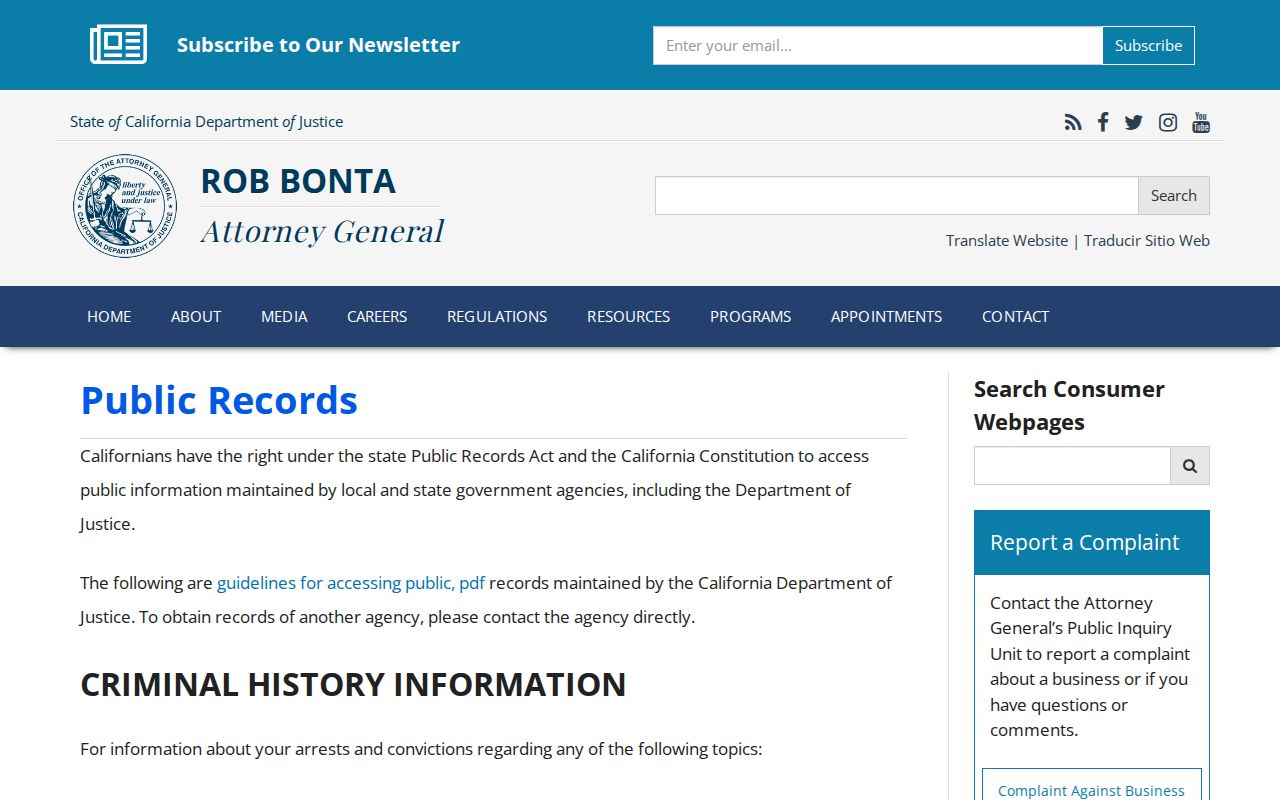
Use the state summary to frame requests, then send the request to the local custodian that holds the record.
Lawful personal use. Records can support family history, estate research, civic review, and fraud checks. Do not use open records to stalk, harass, threaten, or intimidate anyone.
Requesting Alhambra Public Records
The California Public Records Act is now codified in Government Code division 10, sections 7920.000 through 7931.000. The DOJ summary says requesters should identify the record, subject, and location if known. Agencies have 10 days to determine whether records are disclosable, with a possible 14-day extension in limited circumstances. Direct duplication costs may be charged, and special extraction or programming costs can apply for some electronic data.
- Identify the custodian first. Use the city for municipal records, RR/CC for recorder and county clerk records, the court for case files, the Assessor for parcels, and state agencies for statewide registries.
- Check the official index or portal before sending a broad request. A case number, document number, parcel number, date range, or exact name can lower cost and delay.
- Submit the request through the office's stated route. Alhambra City Clerk requests use the city Public Information Request Form at the clerk's office; county and court requests use their own portals, counters, or mail rules.
- Ask for the copy type needed. Plain copies, certified copies, images, searches, and mailed copies can carry different fees.
- If the office denies or narrows access, ask for the exemption and consider refining the request to nonconfidential fields, dates, or record titles.
Alhambra Request Fallbacks
When an online search fails, the fallback depends on the record. For recorder records, visit Norwalk and use the name and year index because RR/CC says real estate records may be viewed free but not searched or reviewed online through the official public web path. For court records, use the paid index for the case clue, then visit courthouse public-access computers or contact the courthouse handling the case for documents not available remotely.
For vital records, use RR/CC or CDPH copy procedures instead of assuming a public index exists. For property, pair the Assessor portal with RR/CC documents and the county property tax portal when tax status matters. For police records, Alhambra routes questions to the Police Records Section at 626-570-5107. For current custody, use LASD's Inmate Information Center and CDCR's CIRIS for state incarceration records. The Megan's Law registry shows only information California law allows to be public.
Note: The research preserved gaps for exact Assessor public field lists, current vital-record fees, and full vital application field inventories.